Human in the loop
The platform informs and supports plant operators rather than overriding them.
 computools
×
computools
×

An introductory conversation about where BiofuelAi is heading — and where an engineering partner could complement the team.


Computools helps technology and energy companies turn complex data, AI and engineering capabilities into scalable software products.
Data pipelines, model serving, MLOps, and analytics that move research code into dependable production systems.
Turning algorithms and internal tools into multi-tenant products with real users, roles, and workflows.
Connecting industrial and third-party data sources into one reliable, observable platform on AWS, GCP or Azure.
Monitoring, forecasting and optimisation platforms for energy assets, plants and distributed equipment.
Certified delivery: ISO 9001:2015, ISO 27001:2013, GDPR-aligned. Forbes Technology Council member.
BiofuelAi combines domain expertise, physics-informed modelling and AI to improve the performance of anaerobic digestion plants — helping operators produce more gas, reduce waste, and make decisions sooner.
The platform informs and supports plant operators rather than overriding them.
No two AD plants are at the same operational maturity, so clients adopt modules and expand over time.
Coming out of University of Surrey research, with the £1m Manchester Prize behind it, and now onboarding new sites.
The hard part — the domain expertise, the models and the IP — already sits inside BiofuelAi. As the company moves from research into commercial deployment, the questions we would expect to become louder are less about the model and more about productisation and repeatable delivery.
These are hypotheses, not conclusions — the point of the call is to find out which of them are actually true for BiofuelAi today.
How does a strong AI and biogas technology become a product that can be deployed repeatedly across tens or hundreds of AD plants — without the core team becoming the bottleneck?
SCADA, historians, sensors, lab data, spreadsheets and third-party APIs — normalised into one dependable pipeline feeding the BiofuelAi models.
Turning algorithms and models into a product operators use on their own — not a service your team runs by hand for each customer.
Making onboarding the next AD plant a repeatable path rather than a bespoke project each time.
Additional engineering around the core BiofuelAi team — without trying to replace your domain and AI expertise.
Not biogas — but structurally close: industrial data from distributed assets, turned into something operators act on.
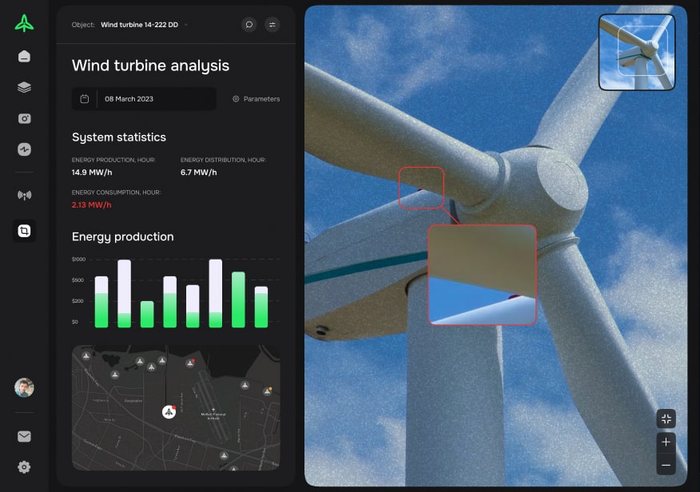
Problem: the world’s largest wind turbine manufacturer held turbine inspection data in mixed formats (JSON, PDF) scattered across locations. Analysis was manual, slow and error-prone.
What we built: an IoT-based data management system — centralised storage for all inspection reports, automated extraction of the key fields (damage categories, assessment status), and a business-logic module that prioritises maintenance tasks, behind an interface built for the people doing the work.
Result: a 5% increase in mean time between failures, lower operating costs with fewer personnel involved, higher annual generation and revenue — and high-altitude inspection work largely designed out.
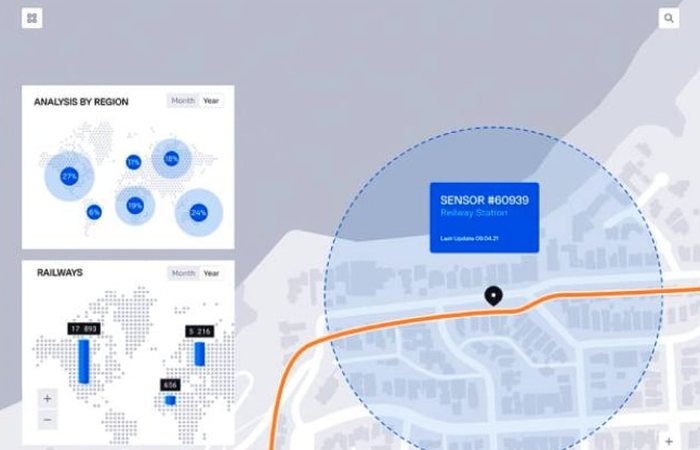
Problem: a major Western-European rail operator had no real-time view of where cargo wagons were or what condition they were in — slow response to faults, idle wagons, lost productivity.
What we built: sensors on the wagons feeding volume, pressure and temperature over MQTT into a central system that analyses the stream, raises alerts the moment a parameter deviates, and presents it all to operators.
Result: 24/7 monitoring of safety parameters and a drop in manual inspections, previously carried out twice a day.
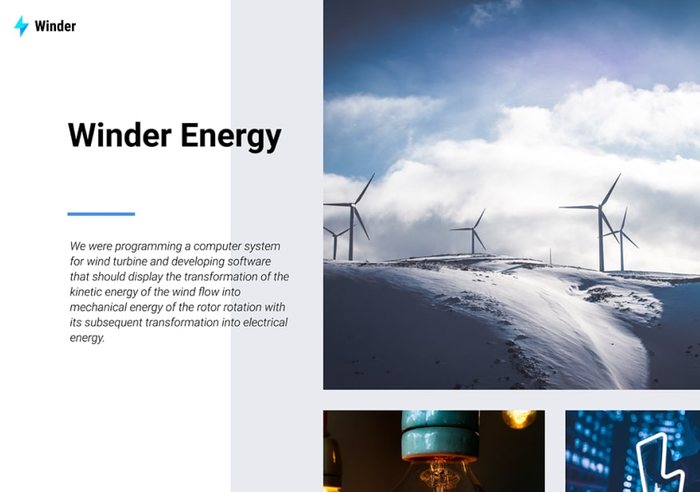
Problem: the region’s largest wind farm (600 MW) needed precise calculations to position generating equipment across varied terrain — complex, multi-parameter algorithms that until then required expert-led empirical research, because the existing systems could not calculate in real time.
What we built: a system combining topological, weather and device-metered data with turbine characteristics: a suite of algorithms that predict generation output, and a “what if” tool for testing locations, direction and configuration before committing to an installation.
Result: 50% less decision-making time for new turbine installations, and 90% accuracy in suggesting optimal turbine locations, adapted across diverse terrains.
Read the full case study → *Client name changed under NDA
Problem: a wind-energy manufacturer (€11.8bn power solutions revenue, 173 GW installed across 88 countries) had no capability for financial planning or predictive insight, limited customer analytics, and strict rules on document and data security to satisfy.
What we built: a custom ERP and HRM for internal document management and customer analytics, with modules for financial planning and forecasting and for personnel management — React, Java, Flutter on AWS.
Result: 20% less document processing time and 36% fewer forecasting errors.
*Client name changed under NDA
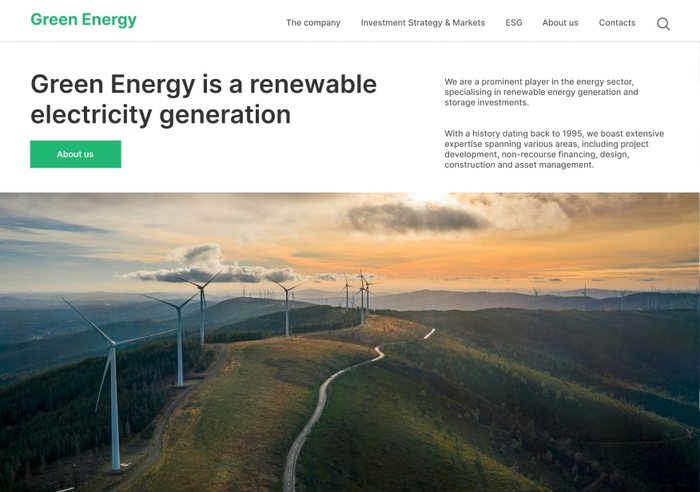
Problem: a renewable generator with over 130 MW contracted across Thailand, Malaysia and Vietnam was losing time to poor coordination between suppliers, while financing for energy-efficient equipment stayed hard to access.
What we built: a portal that coordinates administrators, contractors and sellers, and processes energy-saving loan applications end to end.
Result: over 10,000 loan applications in two years, and loan decisions cut from two weeks to two working days.
Read the full case study → *Client name changed under NDA
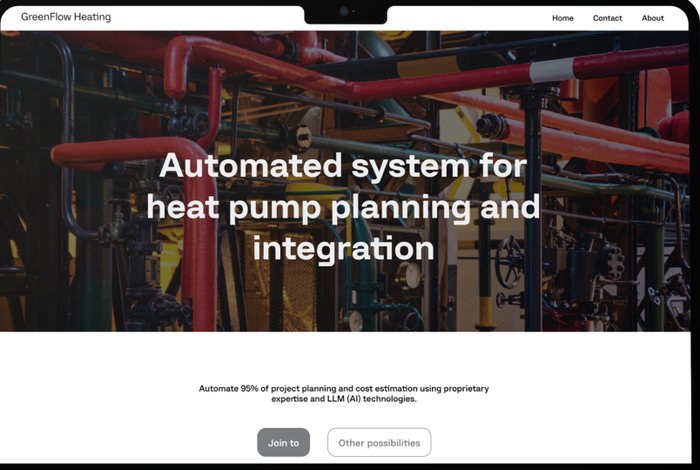
Problem: a German heat-pump installer had a proprietary planning and cost-estimation method that lived with its experts — every project ran through them, and nothing was automated.
What we built: a system that automates 95% of project planning and cost estimation by combining that proprietary expertise with LLM technologies, plus a portal that tracks project status in real time — React, Python, OpenAI API, PostgreSQL on AWS. Discovery produced a prototype first, then refinement until it met the accuracy bar.
Result: routine work for the engineering team cut by over 90%, with faster deal closures and higher customer satisfaction.
*Client name changed under NDA
Nothing here requires starting with a large project. Each step is useful on its own, and only leads to the next one if it earns it.
A short, focused assessment of the current architecture, data flows and platform — ending in a written view of what would need to change to scale deployment. Low commitment, concrete output.
One real problem, solved end to end: a single integration, one customer-facing workflow, or one plant onboarding made repeatable. Proves the working relationship on something that matters.
Dedicated engineering capacity around the core BiofuelAi team — platform, integrations, front-end, cloud and QA — so your team stays on modelling and domain work.
What does the BiofuelAi platform look like today from an operator’s perspective?
What has to happen technically when you onboard a new AD plant?
Which parts of that process are hardest to repeat — and what would break first at twenty plants instead of two?
Where do you expect the biggest engineering bottlenecks over the next 6–12 months?